
Bali Museum
2 Maret 2025 5x Uncategorized
Bali Museum is one of Bali’s most well-known tourist attractions, located on Jalan Major Wisnu in the heart of Denpasar. The magnificent Jagatnatha temple is located to the north, while the famed Puputan Badung (Badung Courtyard) and the four-faced monument (Catur Muka monument) are located in front of it (west). The land is 2,600 m2 and is divided into three yards: outside yard (jaba), middle yard (jaba tengah), and internal yard (jeroan), which are enclosed by a wall and gate.
How to Get to Bali Museum
Bali Museum is centrally located on Jalan Mayor Wisnu, Dangin Puri, Denpasar, Bali 80232. The magnificent Jagatnatha temple is located to the north, while the famed Puputan Badung (Badung Courtyard) and the four-faced monument (Catur Muka monument) are located in front of it (west). The Bali Museum is 15 kilometers from Ngurah Rai Airport, and it takes 1 hour or roughly 30 kilometers to go there from Ubud.
What to Expect at Bali Museum
The second question is, “What is the benefit of visiting the Bali Provincial State Museum?” This is undoubtedly a question for individuals who have never visited the museum. The Bali Provincial State Museum is an ethnographic museum. As a result, you must have an interest in history or like seeing traditional Balinese architecture. However, suppose you have no interest in Balinese antiquity. In that situation, you would find it difficult to reap the benefits of visiting the Museum. The Bali Provincial State Museum varies from the present Museum at Ubud tourist destinations. The Bali Museum houses a historically significant art collection from Balinese culture. Museum collections include anthropological materials such as ancient equipment, religious and customary ceremonial objects, and occasional Balinese art and cultural development. By seeing the museum collection, you will be able to compare the evolution of a Balinese culture from prehistoric to present times.
What You Can See at Bali Museum
As one of the museums in Denpasar that is highly comprehensive with historical stories from Bali’s culture, and has various collections of ancient civilizations found in Bali, which will contribute to your full understanding of this treasured and very distinctive island of Bali. The object collections or ancient tools kept at Bali Museum can be classified into three categories: prehistoric objects such as tombstones (sarkophags), historical objects such as Stupika clay containing the mantra ‘Ye te’, bronze statues (Arca Perunggu), and ethnographic objects such as Kris, Endek material, religious ceremony equipment, and Sidakarya mask.
Prehistoric object collections include the Grave Petrify (sarkophag), historical object collections such as stupika clay containing superstitious formula Ye Te, bronze statues (Hindu and Buddha statues), ethnographic object collections such as Keris, Endek Cloth, and religious ceremony equipment (Sangku, Cecepan, and Sidakarya mask), as well as some unique collections that are equally interesting. These are some prehistoric collections that you can view here, which are ideal for those of you who enjoy history and wish to learn about the history of Bali’s progress from the past to the present, as well as the developments from one era to the next.
Bali Museum History
The fall of the Kingdom of Klungkung to Dutch colonists on April 28, 1908 marked a shift in power in Bali, which became Dutch colonial territory. This condition caused a shift in Bali’s government from being fairly closed to outsiders to becoming more accessible to Europeans, particularly the Dutch, during the European colonial period in Indonesia. All other international nations become increasingly free to visit Bali. They are made up of diverse social classes who frequently carry Balinese souvenirs back to their home countries.
This situation put the existence of Balinese cultural legacy in jeopardy, prompting Dutch scientists, culturalists, and artists to work to avoid it and preserve it. The architect W.FJ Kroon (1909-1913), who was also an assistant resident of southern Bali in Denpasar, came up with the basic plan for the Bali Museum. The plan was achieved with the development of a structure named Gedung Arca in 1910, and the architects that created the Bali Museum were I Gusti Gede Putu Kandel from Banjar Abasan and I Gusti Ketut Rai from Banjar Belong, together with a German architect, Curt Grundler.
Funds and supplies were donated by the Kings of Buleleng, Tabanan, Badung, and Karangasem. The chairman of the antiquities service at the time was W.F Stturterhim, who continued efforts to complete the ethnographic treasury in 1930. To simplify museum management, a foundation was founded, chaired by H.R Ha’ak, with its members and personnel. In 1932, the Bali Museum was opened to the public, and it became a museum for keeping human artifacts and ethnography. The museum’s collection includes ethnographic materials like as tools and equipment for daily living, art, religion, written language, and others that depict the history of Balinese culture.
Bali Museum Geography
The museum building is created in the traditional puri or royal architecture of Denpasar, with a museum complex pavilion depicting many regencies on the island of Bali. So you can visit the Bali museum and view diverse historical relics of each district, and the uniqueness and beauty of each district will broaden your perspective. In one spot, you can learn about the history of the entire island of Bali, making it an ideal museum for travelers. For students interested in learning more about the island of Bali, the location of the Bali Museum is as follows:
- Tabanan Pavilion : Located in the north, it houses collections of keloksi such as dance equipment, dancing costumes, several types of dance masks, wayang kulit, keris (traditional Balinese sword) for Calonarang, and some antique statues from the Tabanan region.
- Buleleng Pavilion: Located in the heart of the structure, it has a characteristic temple design in North Bali and houses a variety of collections, including Balinese costumes from Buleleng, traditional fans manufactured in Buleleng many years ago, and other interesting artifacts discovered.
- Badung Pavilion: Located at the entry with a towering bale kulkul, it houses a variety of prehistoric items utilized by people throughout hunting and farming, agriculture, and metallurgical times in antiquity, as well as a collection of Bali’s fine arts.
- Karangasem Pavilion: Located in the eastern portion of Bali, this pavilion depicts traditional architectural art from that region. This structure has many exhibitions of paintings, fine arts, archeology, and prehistoric relics with a rich history.
The Bali Museum spans 2600 square meters and features three courtyards: exterior (jaba), middle (jaba Tengah), and inner (offal), all surrounded by walls and gates. Candi Bentar is the name of the gate, while Candi Kurung serves as the entry. To the south of Central Jaba, there is a Kulkul Hall (wooden bell). Meanwhile, in the northwest corner is the Bengong Hall, which was utilized during the royal age as a rest area for the King’s family to watch the atmosphere outside the palace. In addition, there is a beji, or royal bath, in front of the Tabanan Building. The roof of the fibers is only used for the roof of the temple building.
Bali Museum Entrance Ticket
Adult : IDR 50,000
Children : IDR 25,000
Opening Hours : 07.30 AM – 03.30 PM

Maybe you are interested in reading the following article:
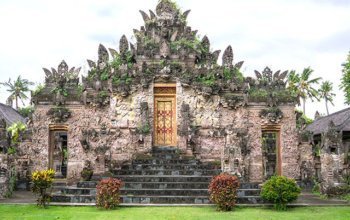
Beji Temple
One of the most well-known Bali places of interest is Beji Temple, which is located in Sangsit Village, some eight kilometers east of Singaraja. If you didn’t know where it was, you could easily walk right by it. If you are traveling from Singaraja, keep an eye out for the little sign on the left... read more

Angseri Hot Spring
Angseri Hot Spring is a popular Bali attraction, perfect for a peaceful day in the island’s heart, surrounded by nature. Hot Spring, in a small Tabanan village, was originally a traditional bathing spot for locals and remains a relaxing destination. Today, it has been transformed into a relaxing retreat enjoyed by both locals and tourists.... read more

BALI BOTANICAL GARDEN
Bali Botanical Garden is one of the most popular Bali Places of Interest, offering a perfect retreat to enjoy the cool central Bali upland. It is popular among residents and visitors who enjoy the highlands and scenery, as well as the unique tropical flowering plants and specimens in its extensive collection. A visit to the... read more





Contact Us
If you have any questions, please contact us.
-
Hotline
0214123456 -
Whatsapp
08123456789 -
Messenger
oketheme -
PIN BBM
BBM123 -
LINE ID
LINE123 -
Email
mybaliisland@gmail.com


